
Introduction
If your doctor has recommended surgery, one of the first questions you may have is — will it be a big operation with a large cut, or can it be done through small keyhole incisions? This is essentially the difference between open surgery and laparoscopic surgery, and it is one of the most common questions Dr. Arpit Panchal answers during consultations at Shree Hospital and ICU, Vadodara.
Both approaches are safe and effective — but they work differently, and the right choice depends on your specific condition, your overall health, and what your surgeon recommends. This article will help you understand both options clearly, so you can have a more informed conversation with your doctor.
What Is Open Surgery?
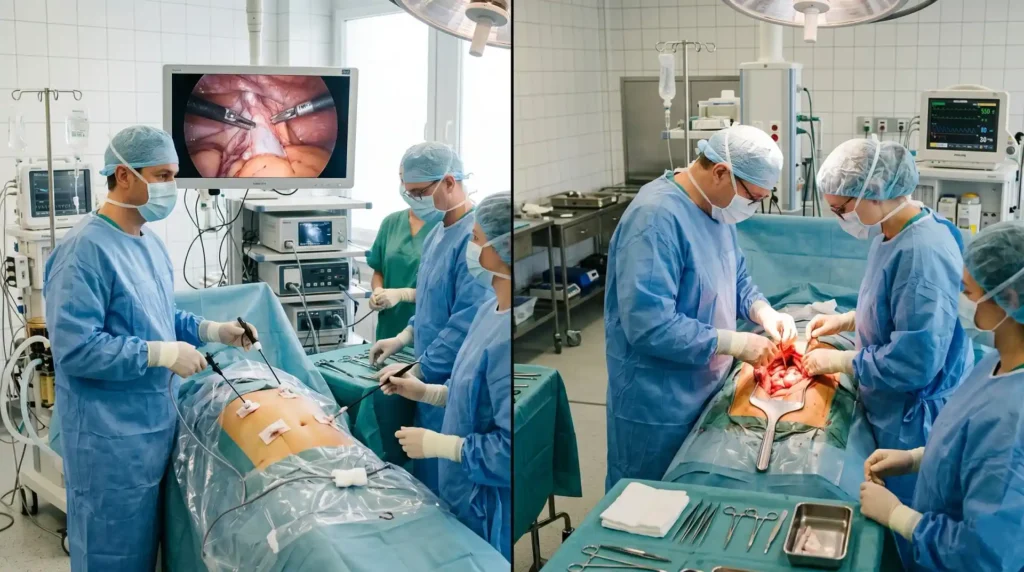
Open surgery is the traditional surgical approach. The surgeon makes a single large incision — typically several centimetres long — to directly access the area being treated. This gives the surgeon a wide, unobstructed view of the organs and tissues involved.
Open surgery has been performed for decades and remains a highly effective, reliable approach for many conditions. In some cases — particularly complex or emergency situations — it is the safest and most appropriate choice.
What Is Laparoscopic Surgery?
Laparoscopic surgery — also called keyhole surgery or minimally invasive surgery — is a modern surgical technique in which the surgeon makes two to four very small incisions, each about 1 cm in size. A tiny camera called a laparoscope is inserted through one of these incisions, sending a live video feed to a monitor. The surgeon then uses specially designed instruments inserted through the other small incisions to perform the procedure while watching the screen.
Dr. Arpit Panchal is a Fellow of Minimal Access Surgery (FMAS) and performs laparoscopic surgery for a wide range of conditions at Shree Hospital and ICU, Vadodara — including hernia repair, gallbladder removal, appendectomy, and hysterectomy.
Key Differences Between Laparoscopic and Open Surgery
Incision size
Open surgery requires a large incision, often 10 to 20 cm or more depending on the procedure. Laparoscopic surgery uses incisions of just about 1 cm each — significantly smaller.
Pain after surgery
Because laparoscopic surgery involves smaller cuts and less tissue disturbance, patients typically experience much less pain in the days following the procedure compared to open surgery.
Hospital stay
Open surgery often requires a hospital stay of several days to a week or more. With laparoscopic surgery, many patients are discharged within 1 to 2 days — and some procedures are performed as day-care surgeries.
Recovery time
Recovery after open surgery can take 4 to 6 weeks or longer. Laparoscopic patients often return to light daily activities within a week and to normal routine within 2 to 3 weeks.
Scarring
Open surgery leaves a longer visible scar. Laparoscopic surgery results in very small scars that are barely noticeable over time.
Risk of infection
Smaller incisions in laparoscopic surgery generally mean a lower risk of wound infection and post-operative complications.
Visibility for the surgeon
Open surgery gives the surgeon direct, wide access to the operating area. In laparoscopic surgery, the view is provided by the camera — which in experienced hands offers excellent precision and clarity.
When Is Laparoscopic Surgery the Better Choice?
For many common surgical conditions, laparoscopic surgery is now the preferred approach because of its clear advantages for the patient. At Shree Hospital and ICU, Vadodara, Dr. Arpit Panchal routinely performs laparoscopic surgery for:
- Gallbladder removal (cholecystectomy)
- Hernia repair
- Appendectomy
- Hysterectomy (uterus removal)
- Abdominal and intestinal procedures
- Ovarian surgeries
If you are in good general health, your condition is not an emergency, and the anatomy is suitable, laparoscopic surgery is likely to offer you a faster, more comfortable recovery.
When Is Open Surgery the Better Choice?
There are situations where open surgery is the safer or more appropriate option. These include:
- Emergency situations such as a ruptured appendix or perforated bowel where speed and wide access are critical
- Very complex cases involving extensive scar tissue from previous surgeries
- Cases where a laparoscopic procedure is started but needs to be converted to open surgery due to unexpected findings
- Certain types of cancer surgeries where a wider field of access is required
Dr. Arpit Panchal always makes this decision based on what is safest and most effective for each individual patient — not on any single preference or routine.
Can a Laparoscopic Surgery Be Converted to Open During the Procedure?
Yes, and this is not uncommon or a sign that something has gone wrong. Sometimes, once the surgeon is inside and can see the full picture, it becomes clear that open surgery will achieve a better and safer result. In such cases, the surgeon will make the decision to convert — always in the patient’s best interest. This possibility is always discussed with patients beforehand so there are no surprises.
What Should You Ask Your Surgeon?
Before your surgery, it helps to ask your surgeon these questions:
- Is laparoscopic surgery an option for my condition?
- What are the advantages and risks of each approach in my specific case?
- What is your experience with laparoscopic surgery for this procedure?
- How long will my recovery be with each approach?
- What will happen if the surgery needs to be converted from laparoscopic to open?
At Shree Hospital and ICU, Dr. Arpit Panchal takes the time to answer all of these questions during your consultation — so you walk into surgery feeling fully informed and confident.
Conclusion
Laparoscopic surgery offers clear advantages for many patients — less pain, faster recovery, shorter hospital stay, and smaller scars. But it is not always the right choice for every person or every condition. Open surgery remains an important, highly effective technique that is sometimes the safest path forward.
The best approach is always the one recommended by an experienced surgeon who has thoroughly assessed your individual case. If you have been advised to have surgery and would like to understand your options better, Dr. Arpit Panchal at Shree Hospital and ICU, Vadodara is available for consultation during OPD hours.