
Introduction
Receiving a cancer diagnosis is one of the most difficult moments a person and their family can face. Alongside the emotional weight of the news comes a flood of questions — What happens next? Will I need surgery? What does that involve? How will I recover?
If surgery has been recommended as part of your cancer treatment, it is completely natural to feel anxious, uncertain, or overwhelmed. But understanding what cancer surgery involves — why it is recommended, what it aims to achieve, and what to expect — can bring a great deal of clarity and comfort during what is undoubtedly a challenging time.
At Shree Hospital and ICU, Vadodara, Dr. Arpit Panchal approaches every cancer patient and their family with patience, honesty, and genuine care. This article is written in that same spirit — to help you understand the role of surgery in cancer treatment, so you feel more informed, less afraid, and better prepared for the journey ahead.
Why Is Surgery Used in Cancer Treatment?
Surgery is one of the oldest and most effective tools in cancer treatment. Depending on the type and stage of cancer, surgery may serve different purposes — and understanding these can help you make sense of what your doctor is recommending.
To remove the tumour
The most common reason for cancer surgery is to remove the tumour — the abnormal growth of cells — from the body. When cancer is detected early and has not spread to other parts of the body, surgical removal of the tumour may be the primary and most effective treatment. In many cases, removing the tumour completely gives the patient the best chance of recovery.
To obtain a biopsy
Before treatment can begin, doctors need to confirm the diagnosis and understand exactly what type of cancer is present. A biopsy involves removing a small sample of tissue from the suspicious area so it can be examined under a microscope. This is often a minor surgical procedure and is a critical first step in forming the right treatment plan.
To reduce the size of the tumour
In some cases, a tumour may be too large or too closely situated to vital structures to be removed completely in one operation. In these situations, surgery may be performed to remove as much of the tumour as possible — a procedure sometimes called debulking — which can make other treatments such as chemotherapy or radiation more effective.
To relieve symptoms and improve quality of life
Sometimes cancer causes physical problems that surgery can help address — such as a blockage in the digestive tract, a build-up of fluid, or pressure on surrounding organs. In these cases, surgery is performed not to cure the cancer but to relieve discomfort and improve the patient’s day-to-day quality of life.
To reconstruct or repair
In some situations, surgery may be performed after the primary cancer treatment to repair or reconstruct areas of the body that have been affected — helping to restore appearance, function, and confidence.
Is Surgery Always Part of Cancer Treatment?
No — surgery is not always required, and not every cancer patient will need an operation. The role of surgery in any individual’s treatment depends on many factors, including:
- The type of cancer
- The location of the tumour in the body
- The size of the tumour
- Whether the cancer has spread to nearby tissues, lymph nodes, or other organs
- The patient’s overall health and medical history
- Other treatments being considered alongside surgery — such as chemotherapy, radiation, or targeted therapy
Dr. Arpit Panchal carefully evaluates each patient’s case individually before making any surgical recommendation. The goal is always to choose the treatment — or combination of treatments — that offers the best possible outcome with the least impact on the patient’s overall wellbeing.
What Happens Before Cancer Surgery?
Preparation for cancer surgery is thorough and involves several important steps. At Shree Hospital and ICU, Vadodara, Dr. Arpit Panchal ensures that every patient and their family is fully prepared before the day of surgery.
Detailed consultation and explanation
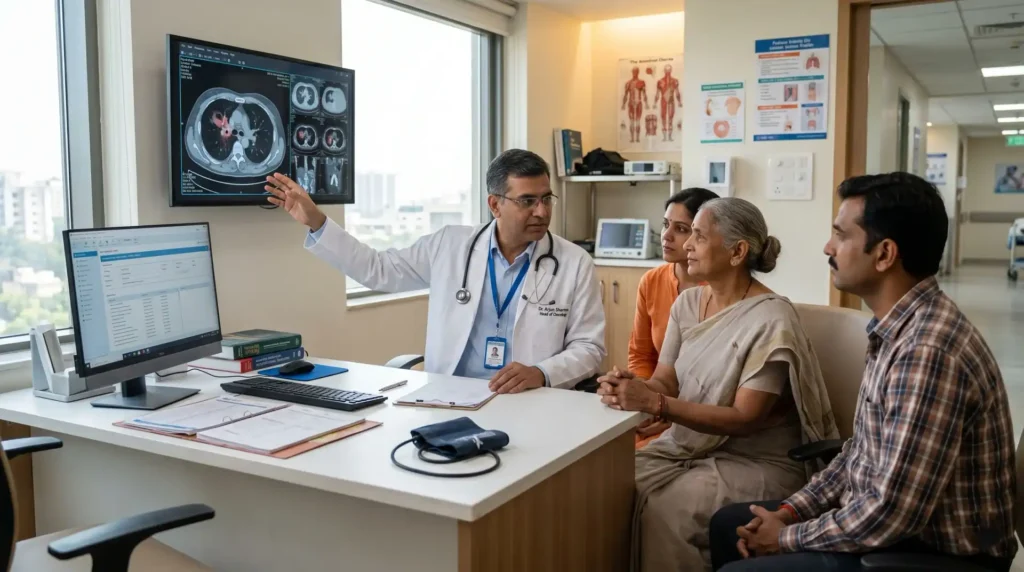
Dr. Panchal will sit with you and your family to explain the surgical plan in clear, simple language. He will describe what the operation involves, what he hopes to achieve, what the risks are, and what recovery will look like. No question is too small — you are encouraged to ask everything that is on your mind.
Investigations and pre-operative tests
Before surgery, a series of tests will be carried out to assess your overall health and ensure you are fit for the procedure. These may include blood tests, imaging scans, heart function tests, and other assessments depending on your individual situation.
Informed consent
Surgery will only proceed once you — and where appropriate, your family — fully understand what is being planned and have given your informed consent. This is not just a formality — it is a reflection of the respect Dr. Panchal and his team have for every patient’s right to be involved in their own care.
Anaesthesia assessment
You will also be assessed by the anaesthesia team before surgery to determine the safest form of anaesthesia for your procedure and overall health.
What Happens During Cancer Surgery?
The specifics of what happens during surgery depend entirely on the type and location of the cancer being treated. However, in every case at Shree Hospital and ICU, you can expect:
- Surgery to be performed in a fully equipped, modern operation theatre
- A skilled and experienced surgical team led by Dr. Arpit Panchal
- Careful, precise technique aimed at removing the affected tissue while minimising impact on surrounding healthy structures
- Continuous monitoring of your vital signs throughout the procedure by a qualified anaesthesia team
- ICU care available immediately after surgery if needed — Shree Hospital and ICU has a dedicated ICU facility for post-operative monitoring
What Happens After Cancer Surgery?
Recovery after cancer surgery is a gradual process — and it is one where you will not be left to manage alone. At Shree Hospital and ICU, post-operative care is attentive, structured, and compassionate.
Immediate recovery
After surgery, you will be monitored closely in the recovery area and, if required, in the ICU. Pain management is a priority — Dr. Panchal and his team will ensure your discomfort is well controlled from the moment you wake up.
Hospital stay
The length of your hospital stay will depend on the nature of the surgery, how your body responds, and how your recovery progresses. Dr. Panchal will give you a clear expectation of this before your operation so you and your family can plan accordingly.
Wound care and follow-up
Before you are discharged, you will receive clear instructions on caring for your wound at home, what to watch out for, and when to return for follow-up. Regular post-operative appointments allow Dr. Panchal to monitor your recovery, review pathology results from the removed tissue, and coordinate with other specialists if further treatment is needed.
Emotional recovery
Physical healing after cancer surgery is only one part of recovery. The emotional journey — for both patients and their families — deserves equal attention and care. At Shree Hospital and ICU, the team is sensitive to this and will support you through both dimensions of recovery as best as they can.
What Questions Should You Ask Before Cancer Surgery?
If surgery has been recommended for you or a loved one, here are some questions worth asking your surgeon:
- Why is surgery being recommended for my specific type and stage of cancer?
- What is the goal of this surgery — to remove the cancer, obtain a sample, or relieve symptoms?
- What will you remove during the operation, and how will that affect my body?
- What are the risks of this surgery and how are they managed?
- What will recovery look like, and how long will I be in hospital?
- Will I need any other treatments — such as chemotherapy or radiation — after surgery?
- What happens if I choose not to have surgery?
Dr. Arpit Panchal welcomes every one of these questions. An informed patient is always better prepared — and better prepared patients tend to recover with greater confidence and peace of mind.
A Note for Family Members and Caregivers
When a loved one is diagnosed with cancer, family members often carry a heavy weight of their own — worry, helplessness, and a deep desire to do the right thing. If someone you love is facing cancer surgery at Shree Hospital and ICU, Vadodara, please know that you are welcome to be part of the consultation process. Dr. Panchal is happy to speak with family members, answer your questions, and ensure that the entire family feels as informed and supported as the patient.
Your presence, patience, and emotional support for your loved one during this time is one of the most powerful contributions you can make to their recovery.
Conclusion
Surgery plays a vital and often life-changing role in cancer treatment — whether it is removing a tumour, confirming a diagnosis, or improving a patient’s comfort and quality of life. It is a decision that deserves careful thought, honest conversation, and a surgeon who takes the time to truly understand your situation.
At Shree Hospital and ICU, Vadodara, Dr. Arpit Panchal brings surgical skill, genuine compassion, and a deeply patient-centred approach to every cancer case he treats. If you or a family member has been advised to consider surgery as part of cancer treatment, we encourage you to come in for a consultation — ask your questions, share your concerns, and make your decision with clarity and confidence.
You do not have to face this alone.