
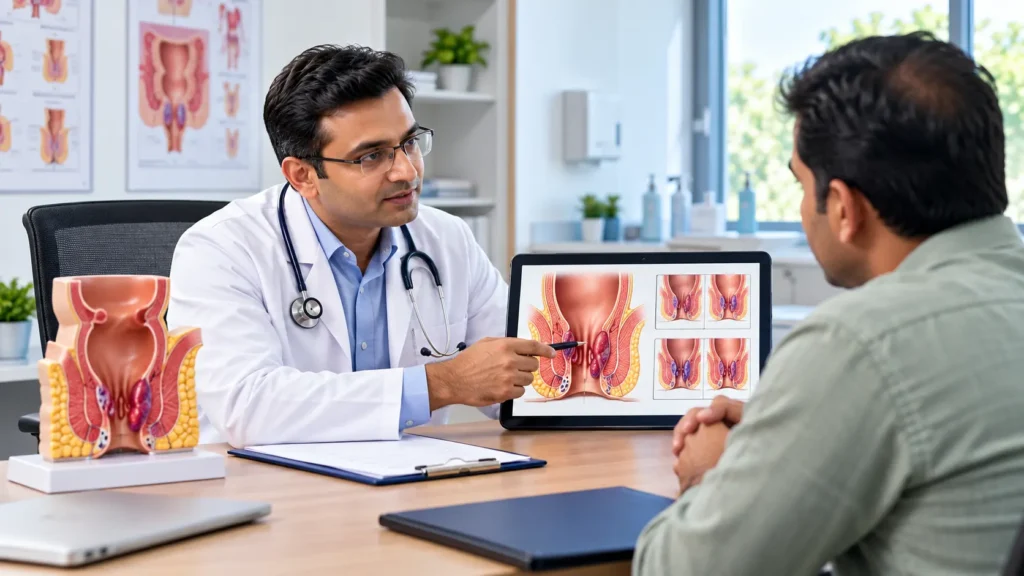
Piles, also called hemorrhoids, are swollen veins in or around the anus that can cause pain, itching, swelling, or bleeding. Mild piles may improve with dietary changes, medicines, and lifestyle measures, while severe or recurring piles may need a medical procedure. If you have persistent bleeding, severe pain, or a lump around the anus, consult a doctor for proper diagnosis and treatment.
What Are Piles?
Piles are swollen blood vessels that develop inside the rectum or around the anus. They can happen due to constipation, straining during bowel movements, prolonged sitting, pregnancy, low-fiber diets, or repeated pressure in the rectal area.
Piles are common and often manageable, but ignoring symptoms for too long can allow the condition to worsen. Getting an early evaluation can help determine the right treatment.
Common Symptoms of Piles
The symptoms can vary depending on the type and severity of hemorrhoids. Common signs include:
- Bright red blood during or after passing stool
- Pain or discomfort around the anus
- Itching or irritation
- Swelling near the anus
- A lump or tissue coming out during bowel movements
- Feeling that the bowel has not completely emptied
- Mucus or moisture around the anal area
Rectal bleeding should not automatically be assumed to be piles. Other conditions can also cause bleeding, so persistent symptoms should be checked by a medical professional.
What Are the Grades of Piles?
Internal hemorrhoids are commonly classified into four grades:
| Grade | What It Means |
| Grade 1 | Piles remain inside the rectum and usually do not come out. |
| Grade 2 | They may come out while passing stool but return inside on their own. |
| Grade 3 | They come out during bowel movements and may need to be pushed back manually. |
| Grade 4 | They remain outside and generally cannot be pushed back inside. |
The grade helps a doctor decide whether conservative treatment, a minimally invasive procedure, or surgery may be appropriate.
How Are Piles Treated?
Treatment depends on the grade, symptoms, and overall health. Mild cases may improve with:
- Eating more fiber through fruits, vegetables, and whole grains
- Drinking enough water
- Avoiding excessive straining during bowel movements
- Staying physically active
- Avoiding prolonged sitting on the toilet
- Using medicines recommended by a doctor
For piles that do not improve or have become more advanced, a doctor may recommend procedures or surgery. The goal is to control symptoms, treat the underlying problem, and reduce the chance of recurrence.
If you are looking for piles treatment in Vadodara, it is important to choose a hospital where your symptoms can be properly assessed before treatment is recommended.
When Should You See a Piles Doctor?
Do not ignore symptoms simply because piles are common. Consult a piles doctor in Vadodara if:
- Bleeding keeps occurring
- Pain is severe or getting worse
- A lump remains outside the anus
- Symptoms interfere with daily activities
- Home measures are not helping
- You experience repeated episodes of piles
- You are unsure whether your symptoms are actually caused by haemorrhoids
A doctor can examine the affected area and recommend appropriate treatment based on the condition.
Why Choose the Right Piles Hospital?
Choosing an experienced medical team is important when symptoms are persistent or severe. A good piles hospital in Vadodara should offer proper diagnosis, explain available treatment options, and recommend a treatment approach based on your individual condition rather than simply treating the symptoms.
Early consultation can also help prevent unnecessary discomfort and complications.
Conclusion
Piles are common, but persistent bleeding, pain, or swelling should not be ignored. Understanding the symptoms and grade of hemorrhoids can help you seek treatment at the right time. If you are searching for the best hemorrhoid treatment in Vadodara, Shree Hospital and ICU can help you get your symptoms evaluated and understand the appropriate treatment options for your condition.
Frequently Asked Questions
Can piles go away without treatment?
Mild piles may improve with dietary changes, adequate fluids, better bowel habits, and medicines recommended by a doctor. Persistent or advanced piles may require further treatment.
Is bleeding always a sign of piles?
No. Although piles can cause bright red rectal bleeding, other conditions can also cause bleeding. Repeated or unexplained bleeding should be evaluated by a doctor.
Do all piles require surgery?
No. Many cases can be managed without surgery. The appropriate treatment depends on the grade, symptoms, and response to initial treatment.
Which treatment is best for piles?
There is no single treatment that is best for everyone. The appropriate approach depends on the type and severity of haemorrhoids and should be decided after medical evaluation.
When should I visit a hospital for piles?
You should seek medical advice if you have persistent bleeding, severe pain, a persistent lump, recurring symptoms, or symptoms that do not improve with basic measures.