
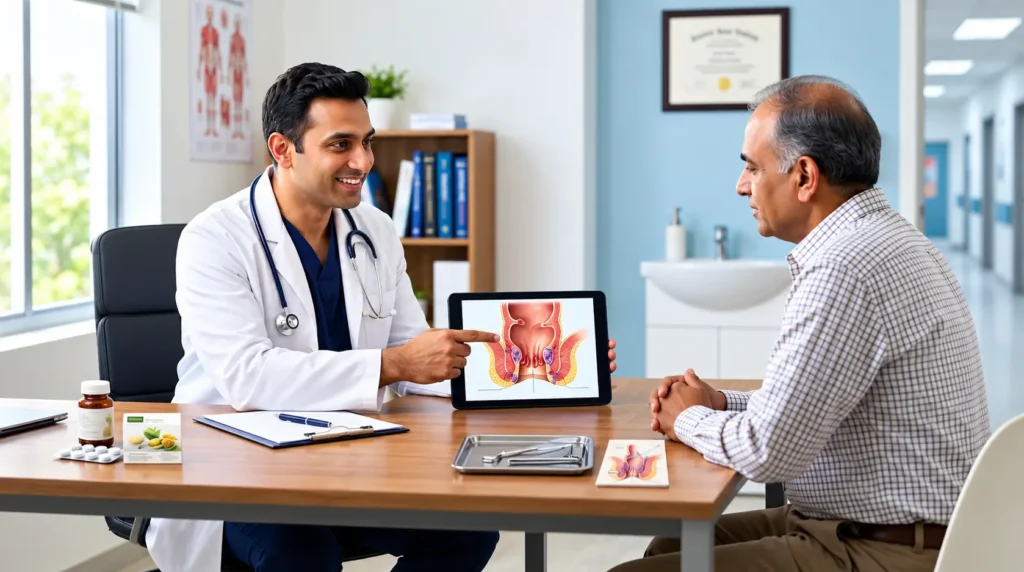
Not every case of piles needs surgery. Mild or moderate piles can often improve with diet changes, medicines, lifestyle changes, and other non-surgical treatments. Surgery may be recommended when piles are large, keep coming back, cause significant bleeding, or do not improve with other treatments. A proper examination by a qualified doctor is the best way to decide which treatment is right for you.
Key Takeaways
- Mild piles can often be managed without surgery.
- Fiber, fluids, and healthy toilet habits can reduce symptoms.
- Persistent bleeding or severe pain should not be ignored.
- Advanced piles may require a procedure or surgery.
- Early medical evaluation can prevent symptoms from becoming worse.
What Are Piles?
Piles, also called hemorrhoids, are swollen blood vessels in and around the anus or lower rectum. They may develop because of constipation, prolonged sitting on the toilet, straining during bowel movements, pregnancy, or a low-fiber diet.
Common symptoms include bleeding during bowel movements, itching, irritation, swelling, pain, or a lump around the anus. The severity of these symptoms can vary from person to person.
When Can Piles Be Treated Without Surgery?
Many people do not need surgery, especially when piles are diagnosed at an early stage. Doctors may first recommend lifestyle changes, medicines, or minimally invasive treatments.
1. Increase Fibre Intake
Eating more fiber can make stools softer and easier to pass. Include vegetables, fruits, whole grains, legumes, and other fiber-rich foods in your daily diet.
2. Drink Enough Water
Adequate fluid intake can help prevent hard stools and constipation. This can reduce the need to strain during bowel movements.
3. Avoid Straining
Pushing too hard during bowel movements can increase pressure on the blood vessels around the anus. Try not to sit on the toilet for unnecessarily long periods.
4. Medicines and Local Treatments
Depending on your symptoms, a doctor may recommend medicines, creams, ointments, or other treatments to relieve pain, itching, swelling, or inflammation.
5. Minimally Invasive Procedures
When lifestyle changes and medicines are not enough, certain procedures may treat piles without traditional surgery. Options may include rubber band ligation, sclerotherapy, or other suitable procedures depending on the type and severity of piles.
These approaches can often be performed without a major surgical operation, but the appropriate option should be decided by a doctor after evaluation.
When Might Piles Need Surgery?
Surgery is generally considered when piles are advanced, or symptoms continue despite other treatments.
A doctor may recommend surgery if:
- Piles are large or severely swollen.
- Internal piles have prolapsed and cannot be pushed back easily.
- Bleeding is frequent or significant.
- Piles repeatedly return despite treatment.
- Non-surgical treatments have not provided adequate relief.
- Symptoms are affecting your daily activities and quality of life.
The decision depends on the type, grade, size, symptoms, and overall health of the patient.
How Are Piles Graded?
Internal piles are commonly classified into four grades:
| Grade | What It Means |
| Grade 1 | Piles remain inside the rectum and may cause bleeding. |
| Grade 2 | Piles may come out during bowel movements but return on their own. |
| Grade 3 | Piles come out and may need to be pushed back manually. |
| Grade 4 | Piles remain outside and generally cannot be pushed back. |
This grading system helps doctors understand how advanced the condition is and choose an appropriate treatment.
When Should You See a Doctor?
Rectal bleeding should not automatically be assumed to be caused by piles. Other conditions can also cause bleeding, so proper diagnosis is important.
You should consult a doctor if you experience:
- Repeated or heavy rectal bleeding
- Severe or increasing pain
- A persistent lump or swelling
- Piles that keep returning
- Symptoms that do not improve with home care
- Changes in bowel habits along with bleeding
If you are looking for a piles hospital in Vadodara, choose a hospital where you can receive proper evaluation and treatment based on your condition rather than assuming surgery is necessary.
Choosing the Right Piles Doctor
The right treatment begins with an accurate diagnosis. A qualified specialist can examine your symptoms, determine the severity of piles, and explain whether conservative treatment, a minimally invasive procedure, or surgery is appropriate.
If you are searching for the best piles doctor in Vadodara, consider a specialist who provides clear treatment options and explains the benefits, risks, and expected recovery before recommending a procedure.
Can Piles Be Prevented?
Although piles cannot always be prevented, several habits may lower the risk:
- Eat enough fiber every day.
- Drink sufficient water.
- Stay physically active.
- Avoid prolonged sitting on the toilet.
- Do not ignore the urge to pass stool.
- Treat constipation early.
- Avoid unnecessary straining during bowel movements.
Conclusion
Piles do not always require surgery. With early diagnosis, proper diet, lifestyle changes, medicines, and suitable non-surgical treatments, many cases can be managed effectively. However, persistent bleeding, severe pain, or advanced piles should be evaluated by a specialist. Shree Hospital and ICU provide professional evaluation and treatment options to help patients choose the right approach based on their condition.
Frequently Asked Questions
Can piles go away without surgery?
Yes. Mild piles can often improve with dietary changes, medicines, lifestyle adjustments, and appropriate non-surgical treatment. More advanced cases may need a procedure or surgery.
Is bleeding from piles always serious?
Bleeding can occur with piles, but rectal bleeding should not automatically be attributed to hemorrhoids. A doctor should evaluate repeated or unexplained bleeding.
What is non-surgical treatment for piles?
Non-surgical treatment for piles may include fiber and fluid changes, medicines, topical treatments, and procedures such as rubber band ligation or sclerotherapy, depending on the condition.
Do Grade 3 piles always require surgery?
Not necessarily. Treatment depends on symptoms, severity, recurrence, and response to other treatments. A doctor can recommend the most suitable option after examination.
How long can piles be treated at home?
Mild symptoms may improve with proper diet, hydration, and bowel habits. If symptoms persist, worsen, or include significant bleeding or pain, medical evaluation is recommended.
Where can I get piles treatment in Vadodara?
A qualified specialist can assess your condition and determine whether you need medicines, non-surgical treatment, or surgery. A hospital with appropriate surgical and diagnostic facilities can provide comprehensive care.